back to labs
lab field exercise sep 2026

first edit.

A take-home for a Lead Learning Experience Designer role at the Wikimedia Foundation. The question: how might learning help more people go from interested to a first edit, and come back for a second? Six pages, one prototype, about two hours of thinking and a few more of building.

the prototype

step through it.

The clickable walkthrough, embedded live. Five steps, as a newcomer would see them. Open it full screen if you would rather use it at full size.

firstedit-walkthrough.netlify.app open full screen ↗
field exercise · 01

The problem, in my words

Hundreds of millions of people read Wikipedia. Only a small share ever click Edit. Of those who start typing, about half never publish. Of those who publish, more than a quarter have their edit undone within two days. Of those whose edit survives, most never come back. The brief asked what, if anything, a Community Development team should do about it, with four to six weeks, no new product features, and a note that the answer should not be a course.

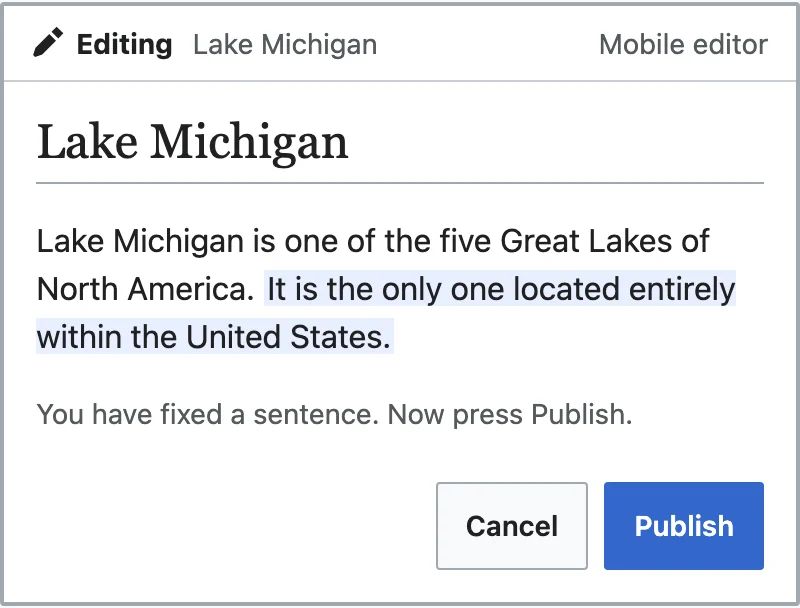
The mobile editor screen from the walkthrough. A newcomer has fixed one sentence in the Lake Michigan article, the changed words are highlighted, and Cancel and Publish buttons wait below.
fig. a · the mobile editor, one sentence fixed, publish not yet pressed
field exercise · 02

What I did first: nothing

Action Mapping starts with the outcome, not the content. The outcome here was simple to state: more first edits still standing after 48 hours, and more people back for a second edit within two weeks. Then the question is what people would need to do differently, and whether the reason they are not doing it is something they do not know. Most of the time it is not.

The analytics came as a snapshot, each stage measured against the original readers. That hides where the losses are. I re-measured each step against the step before it. Three leaks stood out, and each had a different cause. Confusion inside the editor is an interface problem, and product owns it. A reverted edit with no explanation is a consequence with no information attached. That one, learning can fix.

fig. b the funnel, re-measured: each step against the step before it
  1. step 01 read

    Hundreds of millions of people. Only a small share ever click Edit.

  2. step 02 start typing

    About half never publish.interface · product owns it

  3. step 03 publish

    More than a quarter have their edit undone within two days.no information attached · learning can fix

  4. step 04 still standing after 48 hours

    Most never come back.

  5. step 05 back for a second edit

    The outcome, within two weeks.

field exercise · 03

Three directions, one bet

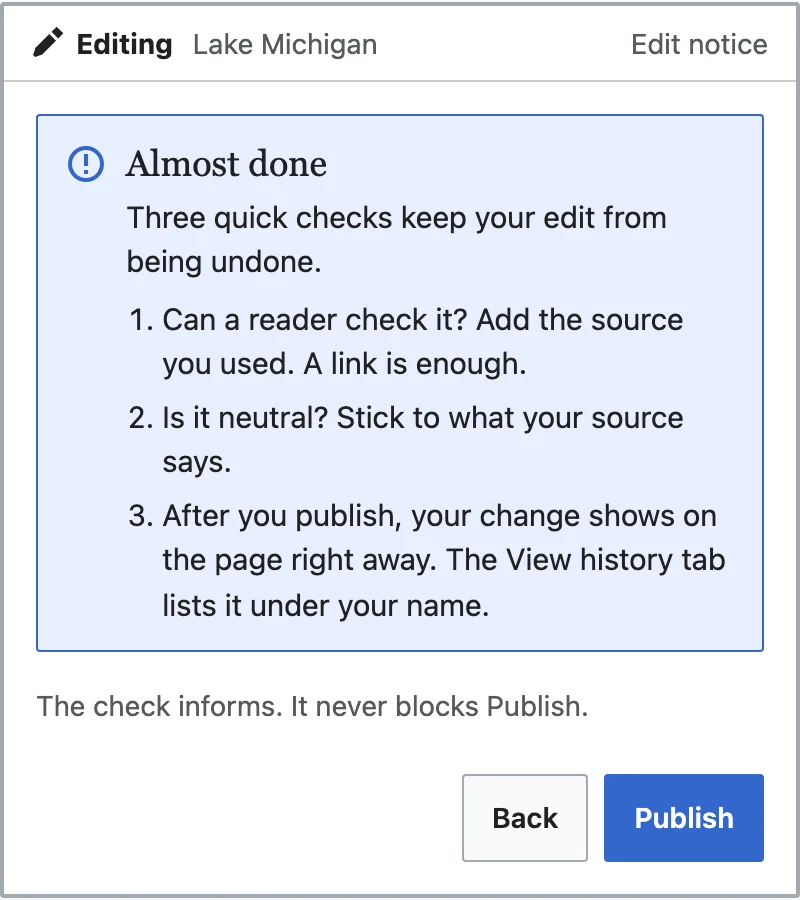
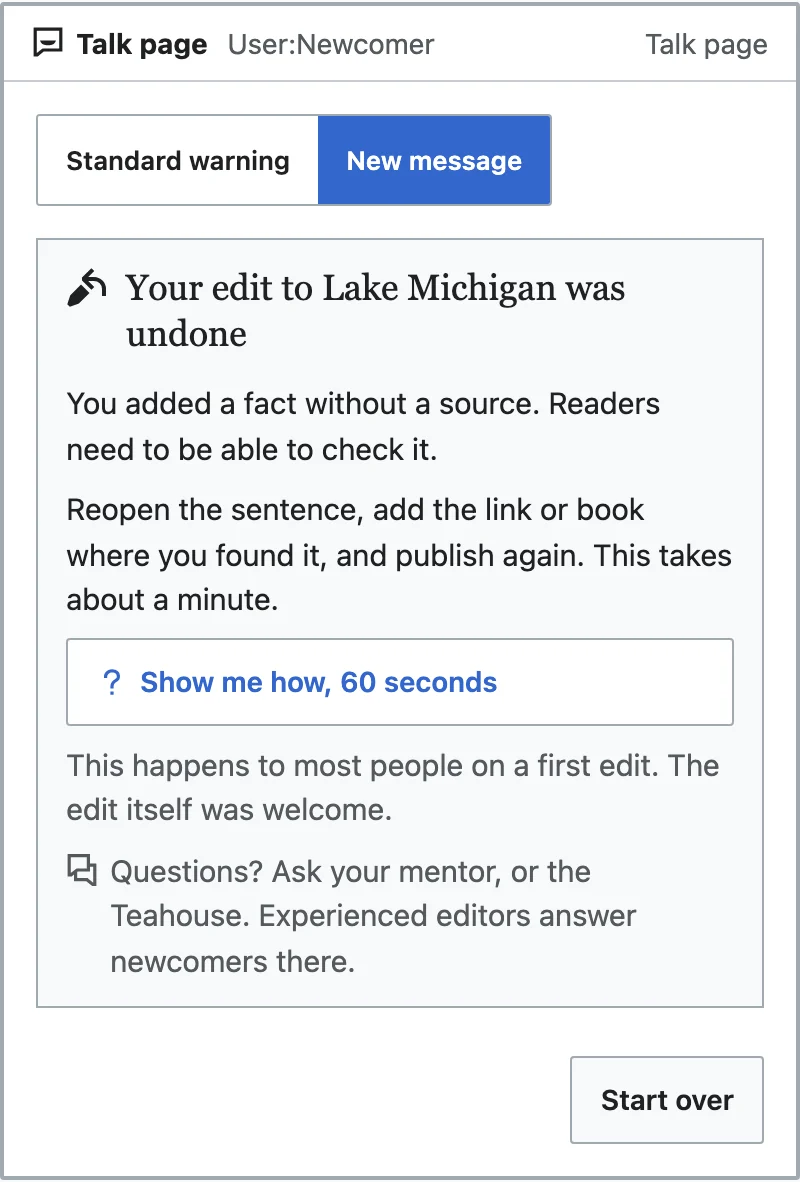
The product team had asked whether people should learn before they edit or while they edit. I added a third: learn from what happens after. A short primer delivered through partner communities. Content behind the help panel the editor already has. Or two small pieces at the moments that matter most: a three-item check before Publish, and a message after a good-faith revert that says why, shows the fix in about a minute, and points to a person.

I chose the third. Every piece of evidence pointed at the revert. It serves the experienced editors' worry about quality and the product team's goal of activation at the same time. It ships with content and community partners only. And it can be tested in six weeks.

01

before they edit

A short primer delivered through partner communities.

02

while they edit

Content behind the help panel the editor already has.

03
the bet

after they edit

Two small pieces at the moments that matter most: a three-item check before Publish, and a message after a good-faith revert that says why, shows the fix in about a minute, and points to a person.

fig. c the two moments, as built
An edit notice headed 'Almost done' listing three quick checks before publishing: can a reader check it, is it neutral, and after you publish your change shows on the page right away. A line beneath says the check informs and never blocks Publish.
before publish a three-item check
A talk-page message headed 'Your edit to Lake Michigan was undone'. It says the fact had no source, shows how to add one and publish again in about a minute, offers a sixty-second how-to, says this happens to most people on a first edit, and points to a mentor or the Teahouse.
after a good-faith revert why, the fix, a person
field exercise · 04

The experiment

Week one is diagnosis before anything gets built: revert data by reason, a handful of observed first edits, conversations with the volunteers who patrol new edits, and measures agreed with an analyst. Then a randomized cohort test. The guardrail is that patroller time per newcomer edit cannot go up. Every number is reported by segment, because the brief cared about women and younger people and the data did not say a word about either. The decision rules were written before the test: if nothing moves and the sessions point at the interface, hand product the notes and stop.

fig. d six weeks, in order
  1. week one diagnosis before anything gets built
    • revert data by reason
    • a handful of observed first edits
    • conversations with the volunteers who patrol new edits
    • measures agreed with an analyst
  2. then a randomized cohort test

    The guardrail: patroller time per newcomer edit cannot go up.

  3. reporting every number by segment

    The brief cared about women and younger people. The data did not say a word about either.

  4. written before the test decision rules

    If nothing moves and the sessions point at the interface, hand product the notes and stop.

field exercise · 05

The artifact

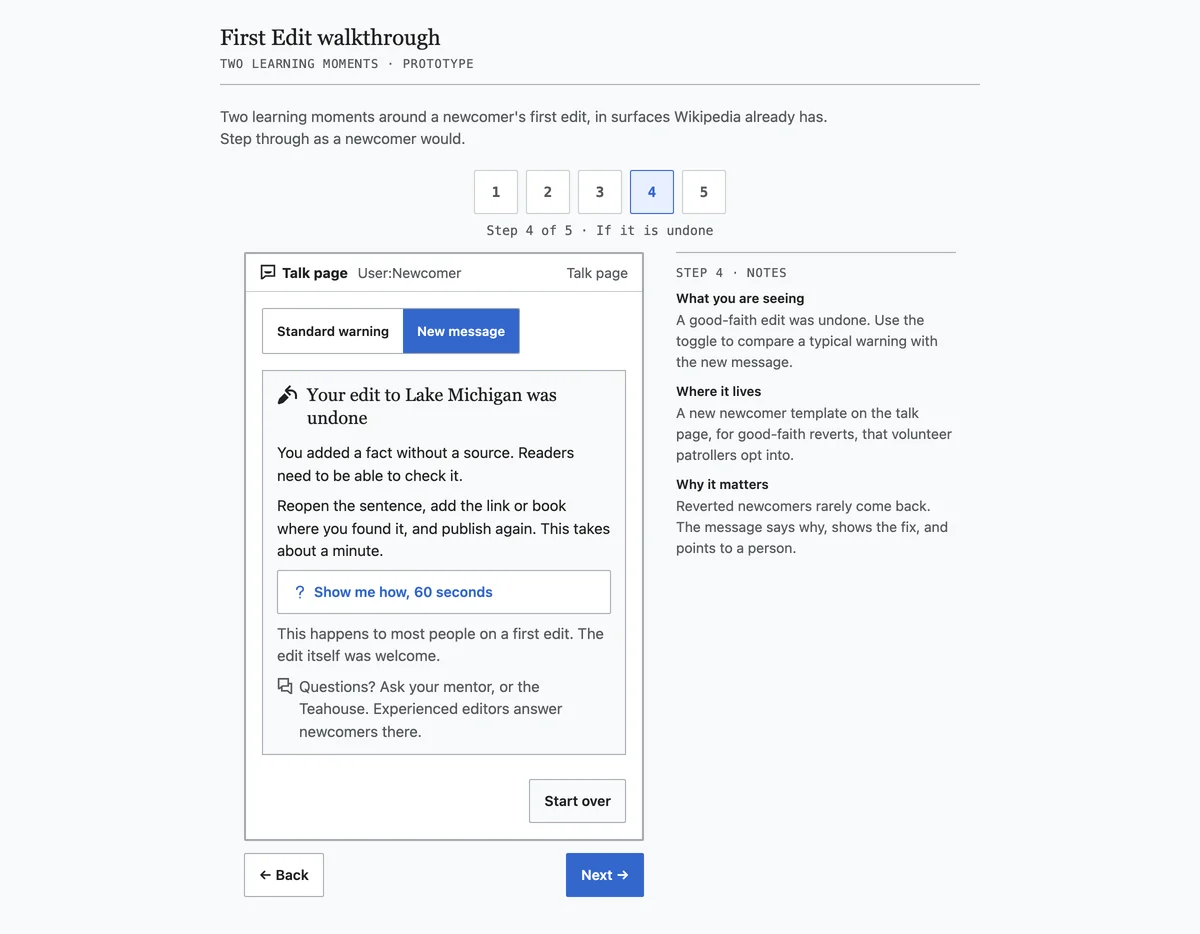
A design system built from Wikimedia's published Codex tokens, so the screens would be judged as content rather than as a mockup. Two screens in the document, and a clickable walkthrough so you can step through the moments as a newcomer would. The revert screen is the whole idea in one picture.

Step 4 of 5 in the First Edit walkthrough, 'If it is undone'. A Wikipedia talk-page panel headed 'Your edit to Lake Michigan was undone' explains that the fact had no source, tells the newcomer to reopen the sentence, add the link or book, and publish again, offers a 'Show me how, 60 seconds' link, notes that this happens to most people on a first edit, and points them to a mentor or the Teahouse. A toggle above it switches between the standard warning and the new message. Notes beside it say what the screen is, that it lives in a newcomer template patrollers opt into, and why it matters.
The revert message, in a Codex-styled walkthrough
Step through the prototype
field exercise · 06

What changed in my thinking

I came in thinking about a course. The evidence kept dragging me to the moments after the edit. The prior course had a 4.9 rating and around sixty finishers, and could not tell anyone whether it changed editing. That was the number I had to stop looking at.

field exercise · 07

How AI was used

Claude Code ran the whole way through. It converted the funnel, caught a mismatch between how the old course and the funnel measured returns, argued the experienced editor's side against my own diagnosis, pulled the Codex tokens, and built the walkthrough. The direction, the diagnosis, the copy and the decision rules are mine. Field tool, not a shortcut.

claude code action mapping codex tokens html / css / js netlify
next in the lab

greenroom: a
development copilot.

An employee asks a real question in plain words. Greenroom answers from a curated library with citations, proposes a next step, then follows up on whether the behavior actually changed.

explore the experiment